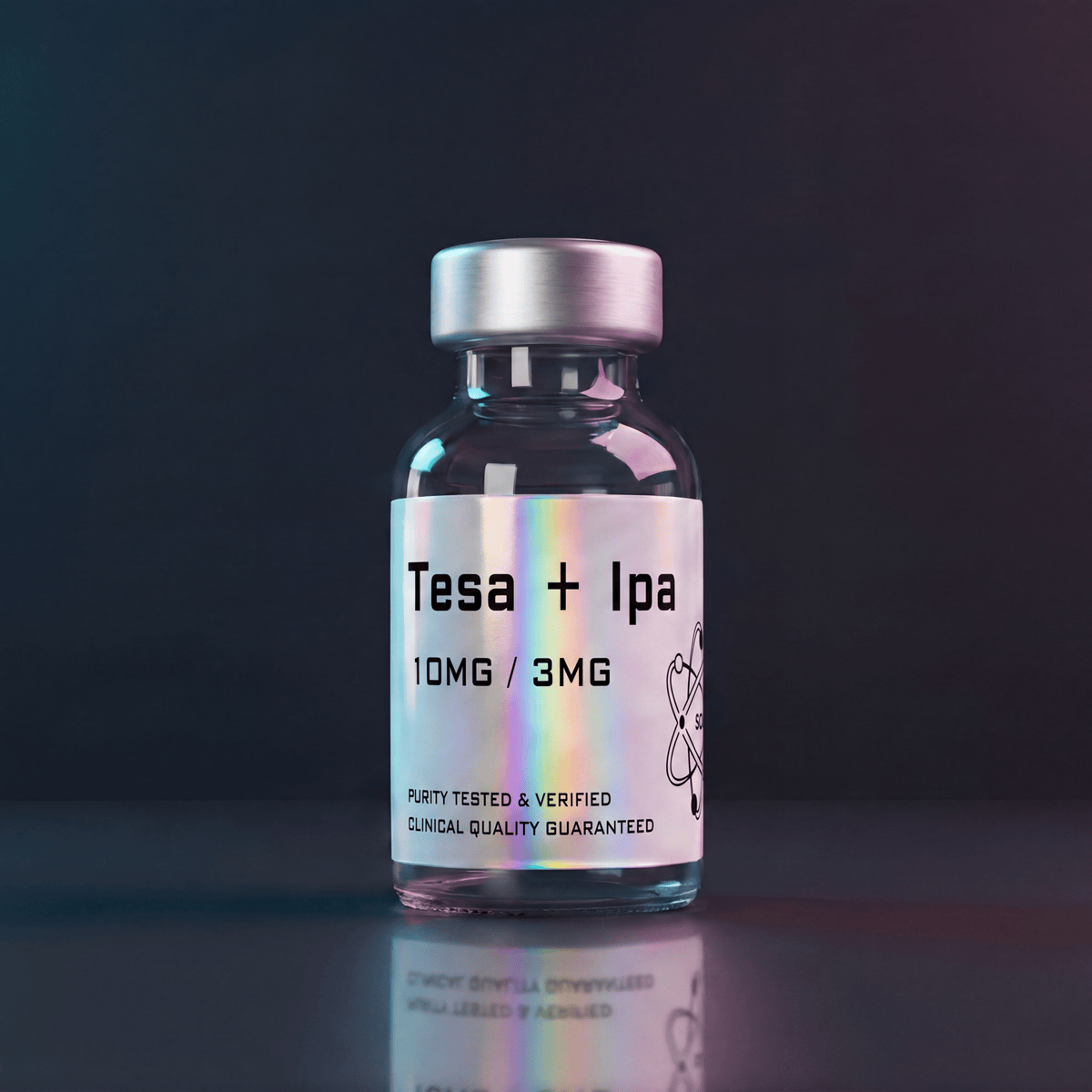
Tesamorelin + Ipamorelin
10mg/3mg
$85.00
About this Product
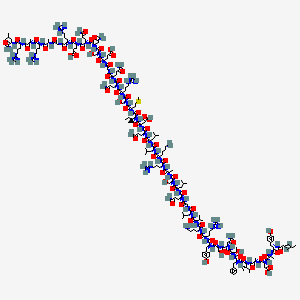
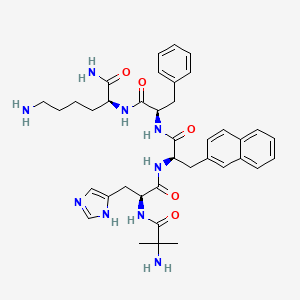
This preparation combines two synthetic peptides that act on separate axes of growth hormone regulation: tesamorelin, an analogue of growth hormone-releasing hormone (GHRH), and ipamorelin, a growth hormone secretagogue receptor agonist. Tesamorelin was developed by Theratechnologies in Montreal, Canada, and received United States Food and Drug Administration approval in 2010 under the trade name Egrifta. Ipamorelin was developed at Novo Nordisk in Denmark and first characterized by Raun and colleagues in 1998, during a program screening synthetic secretagogues for receptor selectivity; it has remained an investigational compound. They are combined in research settings because they engage different receptors within the same regulatory system. Tesamorelin is a 44-amino-acid peptide reproducing the human GHRH(1-44) sequence with a trans-3-hexenoyl group attached to the N-terminal tyrosine and a C-terminal amide; its molecular weight is 5135.8 g/mol. The acyl modification is the defining structural feature, conferring resistance to degradation by dipeptidyl peptidase-4 relative to unmodified GHRH. Ipamorelin is by contrast a pentapeptide of 711.86 g/mol, with the sequence Aib-His-D-2-Nal-D-Phe-Lys-NH2, built from non-proteinogenic and D-amino acid residues and carrying a C-terminal amide. It is structurally unrelated to ghrelin, the endogenous ligand of its target receptor. Mechanistically, tesamorelin binds the GHRH receptor on pituitary somatotroph cells, a class B G protein-coupled receptor coupled to Gs, initiating adenylate cyclase activation and cyclic AMP accumulation. Ipamorelin binds the growth hormone secretagogue receptor type 1a, a Gq-coupled receptor that signals through phospholipase C and intracellular calcium mobilization. Because the receptors are distinct and their cascades converge only downstream, the combination is used to examine whether simultaneous stimulation of both pathways differs from stimulation of either alone. What distinguishes ipamorelin within its class is selectivity: in the original 1998 characterization it released growth hormone with potency and efficacy comparable to GHRP-6 while not elevating adrenocorticotropic hormone, cortisol or prolactin, in contrast to earlier secretagogues in its class. Tesamorelin is distinguished from other GHRH analogues such as sermorelin, which corresponds to the shorter GHRH(1-29) fragment without acyl modification, by both its full-length sequence and its stabilized N-terminus. Blended GHRH-analogue and secretagogue preparations are used in endocrine research to study pulsatile growth hormone regulation and receptor crosstalk. Data specific to fixed-ratio combinations are considerably more limited than data on either component individually. For research use only. Not for human consumption.
Tesamorelin Profile
- Chemical Type
- Synthetic GHRH analog (44 amino acids)
- Molecular Weight
- 5136 g/mol
- CAS Number
- 218949-48-5
- PubChem CID
- 16137828
Tesamorelin Structure
- CAS Number
- 218949-48-5
- Molecular Formula
- C221H366N72O67S
- Molecular Weight
- 5136 g/mol
- PubChem CID
- 16137828
Structure and chemical registry data from PubChem, the NIH's public chemistry database.
Ipamorelin Profile
- Chemical Type
- Synthetic pentapeptide growth hormone secretagogue
- Molecular Weight
- 711.9 g/mol
- CAS Number
- 170851-70-4
- PubChem CID
- 9831659
Ipamorelin Structure
- CAS Number
- 170851-70-4
- Molecular Formula
- C38H49N9O5
- Molecular Weight
- 711.9 g/mol
- PubChem CID
- 9831659
Structure and chemical registry data from PubChem, the NIH's public chemistry database.
Customer Reviews
No reviews for this product yet.